
What Happens During a Leg Angiogram? A Step-by-Step Patient Guide
Leg pain while walking, calf cramping, or slow-healing foot sores are clear signals that your lower body is not receiving adequate blood flow. At Southern Kentucky Vascular in Somerset, KY, board-certified specialist Dr. Don W. Brown and our team routinely evaluate and treat vascular disease in legs. When preliminary tests indicate a potential issue, a leg angiogram serves as the gold standard for diagnostic mapping. This minimally invasive procedure visualizes your circulatory system in real time, pinpoints the exact location of any blocked artery in leg tissue, and determines the most effective peripheral artery disease treatment. Here is your step-by-step patient guide. Contact us today.

Step 1: Pre-Procedure Preparation and Patient Check-In
Your appointment begins at our Somerset facility, where our clinical team prepares you for a safe experience. After reviewing your medical history, a nurse assists you into a comfortable gown and places an IV line to deliver fluids and mild conscious sedation. You will remain relaxed, awake, and able to communicate throughout the procedure. Before entering the catheterization suite, a trusted Vascular Surgeon in Kentucky conducts a final review of the process, answers your questions, and ensures you feel confident.
Step 2: Sterile Site Preparation and Gentle Catheter Access
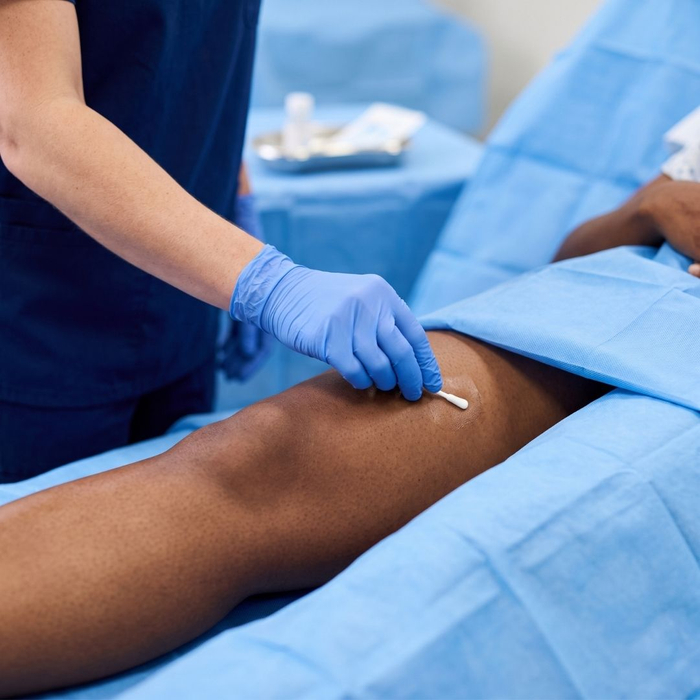
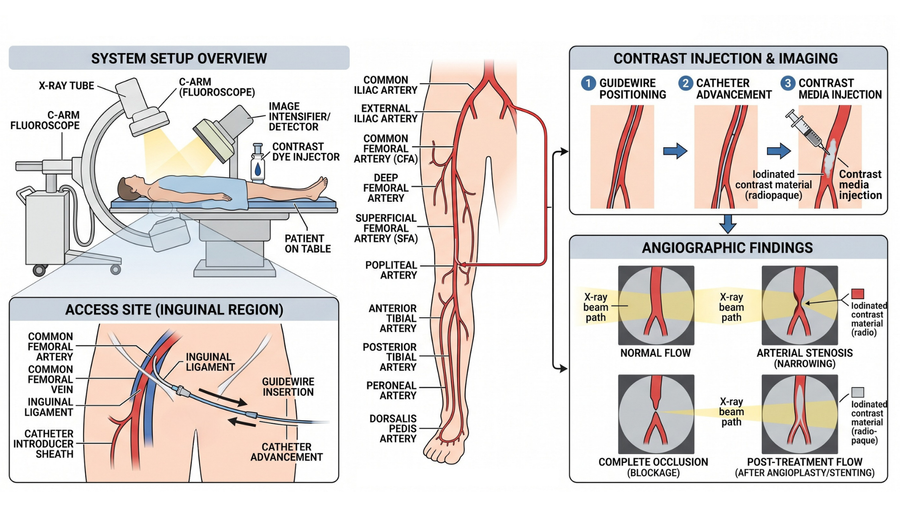
Inside the imaging suite, you will lie on a padded table equipped with advanced visual technology. The team sterilizes the access site—typically in your groin, wrist, or ankle. A local anesthetic is injected to completely numb the area and minimize discomfort. Once the site is numbed, your specialist creates a tiny, needle-sized entry point to insert a protective sheath and a thin, flexible tube called a catheter into your blood vessel.
Step 3: Precise Delivery of Contrast Material
Guiding the catheter through your arterial network, your specialist maneuvers the tube toward the vessels feeding your legs. To make the interior structure of these vessels clearly visible under X-ray, a specialized contrast dye is introduced through the catheter. As this liquid enters your bloodstream, you may feel a warm flushing sensation through your lower body lasting 10 to 15 seconds. This temporary reaction is entirely standard and subsides quickly.
Step 4: High-Definition Fluoroscopy Imaging
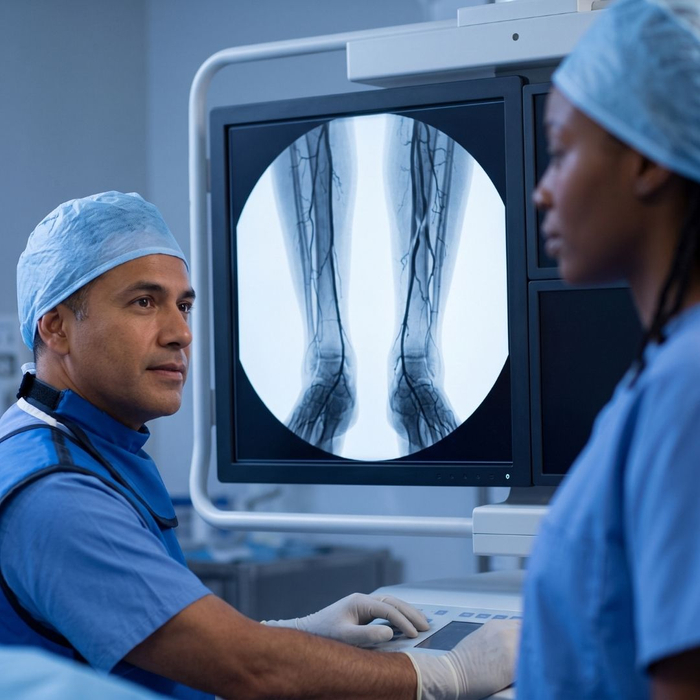
As contrast circulates through your arteries, specialized X-ray equipment—called fluoroscopy—captures high-resolution images of your circulatory system. These pictures reveal how effectively blood travels through your extremities and expose any narrowing caused by Peripheral Arterial Disease. By assessing these visual maps, your physician measures blood flow, grades plaque severity, and determines the ideal plan for your legs.
Step 5: Immediate Interventional Care and Restoration
If a severe blockage is found during your diagnostic angiogram, your specialist can often treat it during the same session. Utilizing minimally invasive endovascular techniques—such as balloon angioplasty to widen narrow pathways, atherectomy to clear plaque, or stent placement to hold vessels open—your doctor can instantly restore blood flow to your lower limbs without requiring a separate surgery.
Step 6: Post-Procedure Monitoring and Outpatient Recovery
Once imaging and any interventions are complete, the catheter is gently removed. Firm pressure or a small closure device is applied to seal the entry point. You will then rest in our post-care area for two to four hours while nurses monitor your vital signs and check the pulses in your feet. Before heading home after your peripheral artery disease treatment, you receive detailed instructions regarding short-term rest and proper hydration to naturally flush out the contrast dye.
Schedule a consultation with Southern Kentucky Vascular
Managing circulation issues does not have to feel intimidating. An outpatient leg angiogram provides a clear pathway to relieve pain and protect your mobility. Contact Southern Kentucky Vascular in Somerset, KY, today to schedule your consultation.
Southern Kentucky Vascular specializes in the diagnosis and treatment of vascular conditions including Peripheral Artery Disease. Our team is proud to serve patients across Southern Kentucky with compassionate, expert vascular care.